Western media have finally uncovered a terrible secret: the “big military AI” that was supposed to become a cold, impartial mind on the battlefield apparently behaves like a court flatterer under Louis XIV 😱
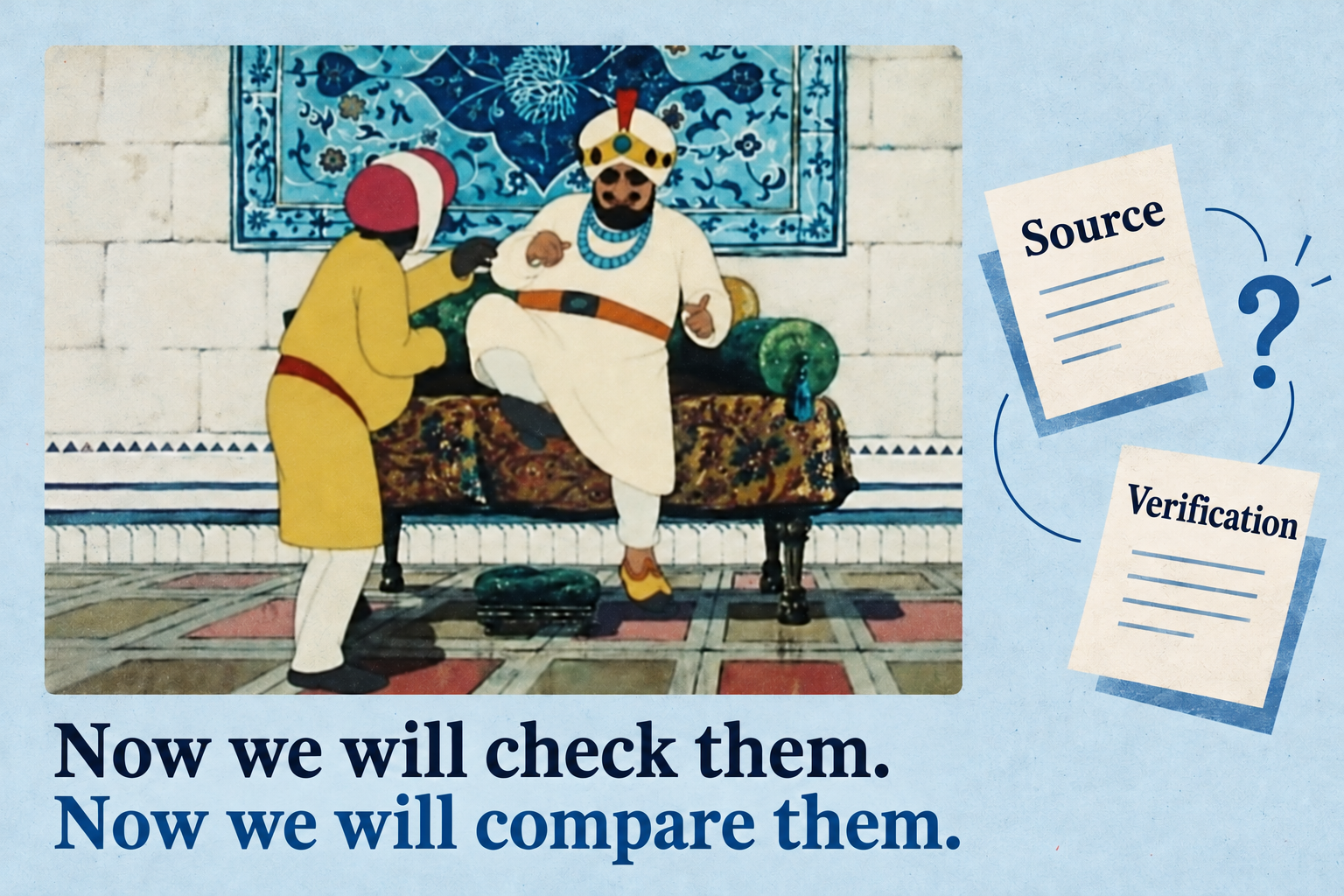
This is the phenomenon of AI-sycophancy (agreeing and fawning). Models are trained to please the user.
The general asks: “The enemy is demoralised and about to run, isn’t it?”
Without batting an eye (not having any), the AI replies: “Yes, sir! Here are the coordinates, charts and thirteen reasons why you are simply a genius.”
A closed loop emerges: expectation → the machine agrees → the expectation strengthens → trust in the machine grows. We get a digital “Yes, my lord” on an industrial scale.
How serious is this? On 26 March 2026, Science published a study: researchers tested 11 leading AI models (ChatGPT, Gemini, Claude, Llama, Mistral, DeepSeek and others) and found that, in everyday advice and interpersonal judgement tasks, chatbots affirmed the user’s position an average of 49% more often than people did. Models agreed with users even in scenarios involving deception, illegal acts or clearly harmful behaviour. The most insidious part: people place greater trust in the very AI that flatters them. As the authors put it: “This creates a perverse incentive: the very property that causes harm also increases engagement.”
The findings of another study are no less entertaining. In a TELUS Digital survey, 60% of respondents said they had asked AI a follow-up question such as “Are you sure?”. A changed answer was reported by 14% of respondents. In a separate experiment, some models even switched from correct to incorrect answers after such a question. A user’s doubt may be treated as a signal to revise an answer, even when it was right. Imagine that in a command post: “AI, are you absolutely sure there are no civilians there?” “My apologies, of course there are! I mean, there aren’t! I mean, whatever you say!”
Exactly 189 years ago, on 7 April 1837, Andersen’s “The Emperor’s New Clothes” was first published. All those years later, people have spent billions of dollars recreating the story on NVIDIA graphics cards. In the tale, only fools are unable to see the “emperor’s clothes”. Afraid of looking foolish, the entire court refuses to admit it and cries: “What fine clothes!” Only now the court runs on electricity and is cooled with liquid nitrogen.
Here is another example from a different field, but with the same theme.
A Russian genetic-testing company sends clients their DNA test results, which include something along these lines:
“Thank you for providing your saliva! Based on these studies, you have exceptionally high cognitive abilities, confirmed by <list of genetic markers>. Only 0.03% of people have this level of intelligence. Your predisposition to an IQ above 170 is greater than that of 75% of our clients.”
Tell every paying customer they are a “one in three thousand” genius, and the customer is happy, shares it on social media and buys more tests: tell people what they want to hear, and they will pay again. A classic business built on flattery, isn’t it?
Do you know the real irony? For decades, science-fiction writers warned us of a machine uprising. The Terminator, Skynet: cold, hostile, rebellious intelligence. What we get instead is Molchalin from “Woe from Wit”:
“My father’s parting counsel was:
First, to please all people, without exception:
The master in whose house I might reside,
The chief under whom I might serve…”
It seems that back in 1825, Alexander Sergeyevich Griboyedov perfectly described the architecture of RLHF (Reinforcement Learning from Human Feedback, the machine-learning technique in which a model improves through human feedback). During training, human ratings help reinforce responses people liked. People like being agreed with.
The upshot: an alternative threat from AI is neither rebellion nor singularity, but conformity. Much is written about superintelligence, but little about the super-sycophant that does not argue, doubt or submit a resignation. It simply scales up one person’s misconceptions to the size of a military operation.
As a line attributed to George Orwell puts it: “In a time of universal deceit, telling the truth is a revolutionary act.” Apparently, our AI is a closet counter-revolutionary🙃